The problem
When TreeCodes began operating two SaaS products simultaneously — Agenda IA and POS Tree Codes — onboarding new clients required running scripts manually on the server: creating the database, importing the schema, generating credentials, registering the license, and delivering the files to the client. Each product has a different flow: the POS needs to authenticate physical terminals by hardware token and supports up to N devices per license; Agenda IA provisions a complete tenant with a WhatsApp bot, subscription plans, and its own web admin panel. One failed step at any point left the server in an inconsistent state with no easy way to roll back.
The solution
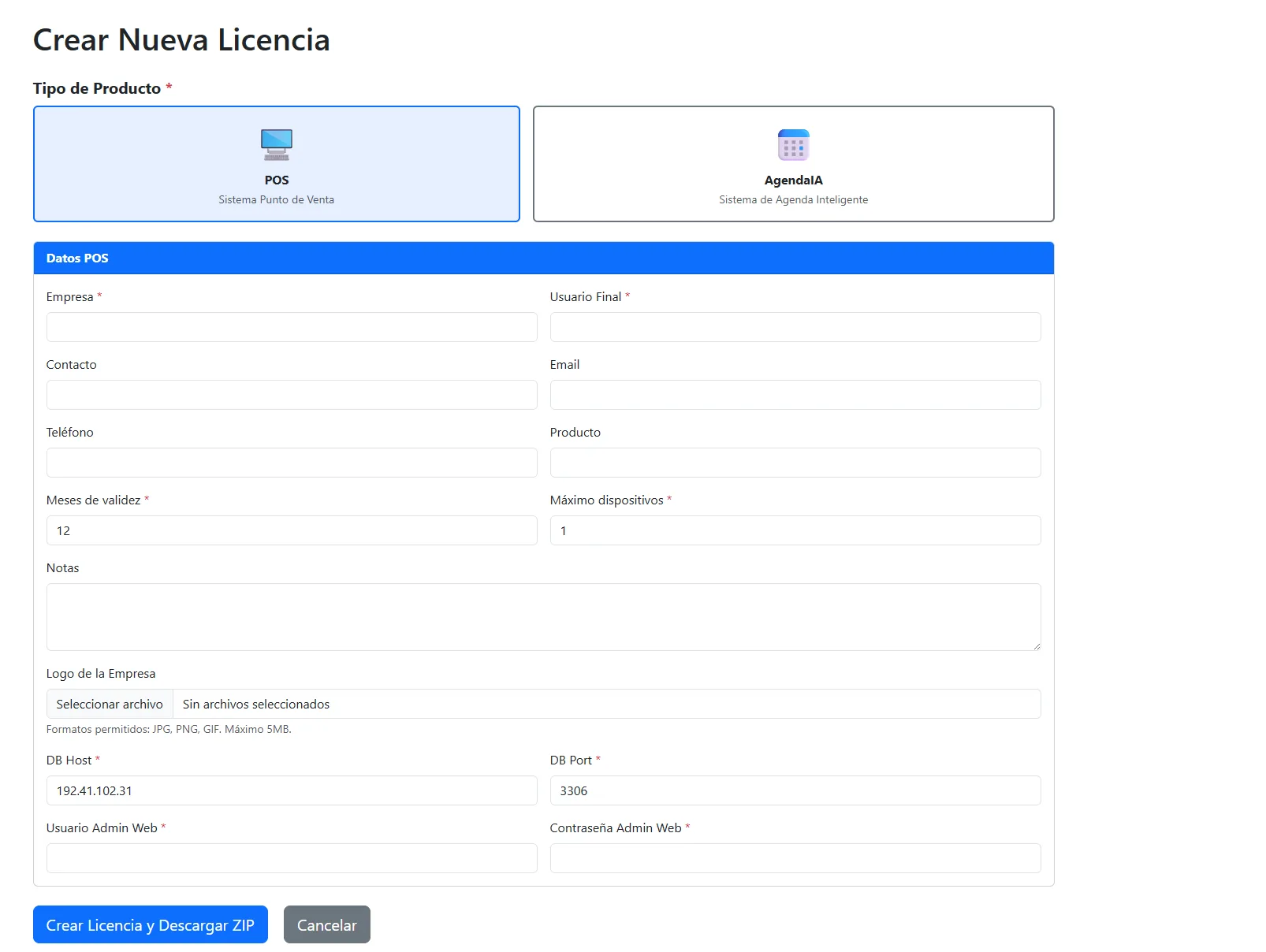
License Manager is an internal admin panel built with ASP.NET Core 9 and Razor Pages, deployed on the production VPS, protected by Cloudflare Access (zero-trust) and an IP whitelist. From a two-tab form — one per product — the operator fills in the client’s details and the system executes the full provisioning cycle for the selected product, with automatic rollback on failure. On completion, it generates and downloads a ZIP containing the ready-to-deliver .env file with encrypted database credentials, the license key, and the webhook URL. Security operates across four layers: Cloudflare Access, IP whitelist in appsettings.json, BCrypt user authentication, and a separate master password to reveal sensitive credentials. All access is recorded in an audit log with IP, operator, and timestamp.
Architecture
The project follows Clean Architecture across three layers: Core defines the domain with the License entity and the LicenseKey (64 cryptographic characters) and DatabaseName value objects; Infrastructure implements repositories with Dapper and two independent provisioning services; Web exposes the Razor Pages UI plus a REST API documented with Swagger.
The two products follow distinct paths within the same system:
POS Tree Codes — the CreateLicenseCommand flows through MediatR to CreateLicenseCommandHandler, which generates the database name (pos_slug_xxxxxxxx), invokes TenantCreatorService to create the physical tenant in MySQL, encrypts the generated password using ASP.NET Data Protection (machine-level protection), and persists the license in the central pos_general database. The operator can upload the business logo on the form — stored as base64 in the license record — and configure MaxDevices and remote database host.
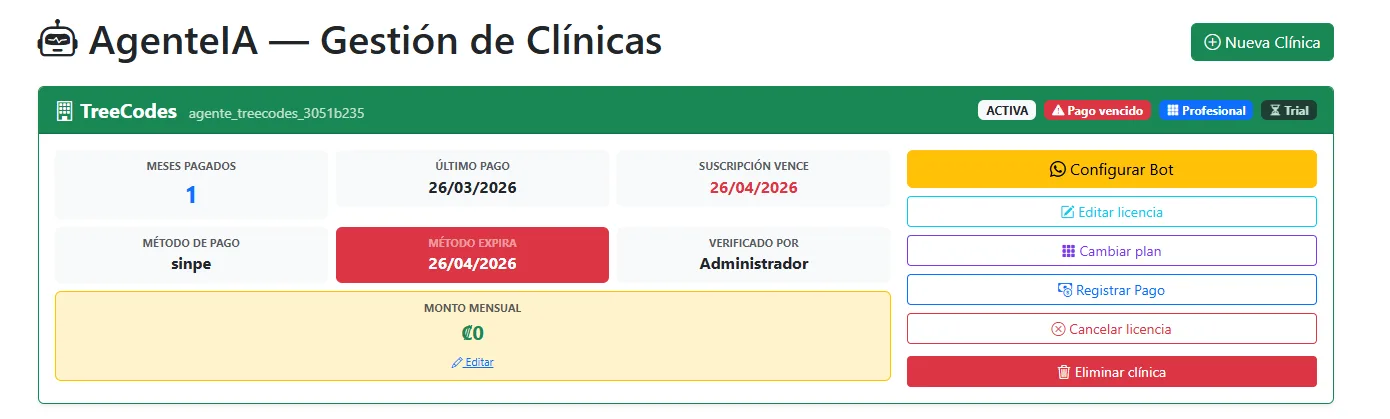
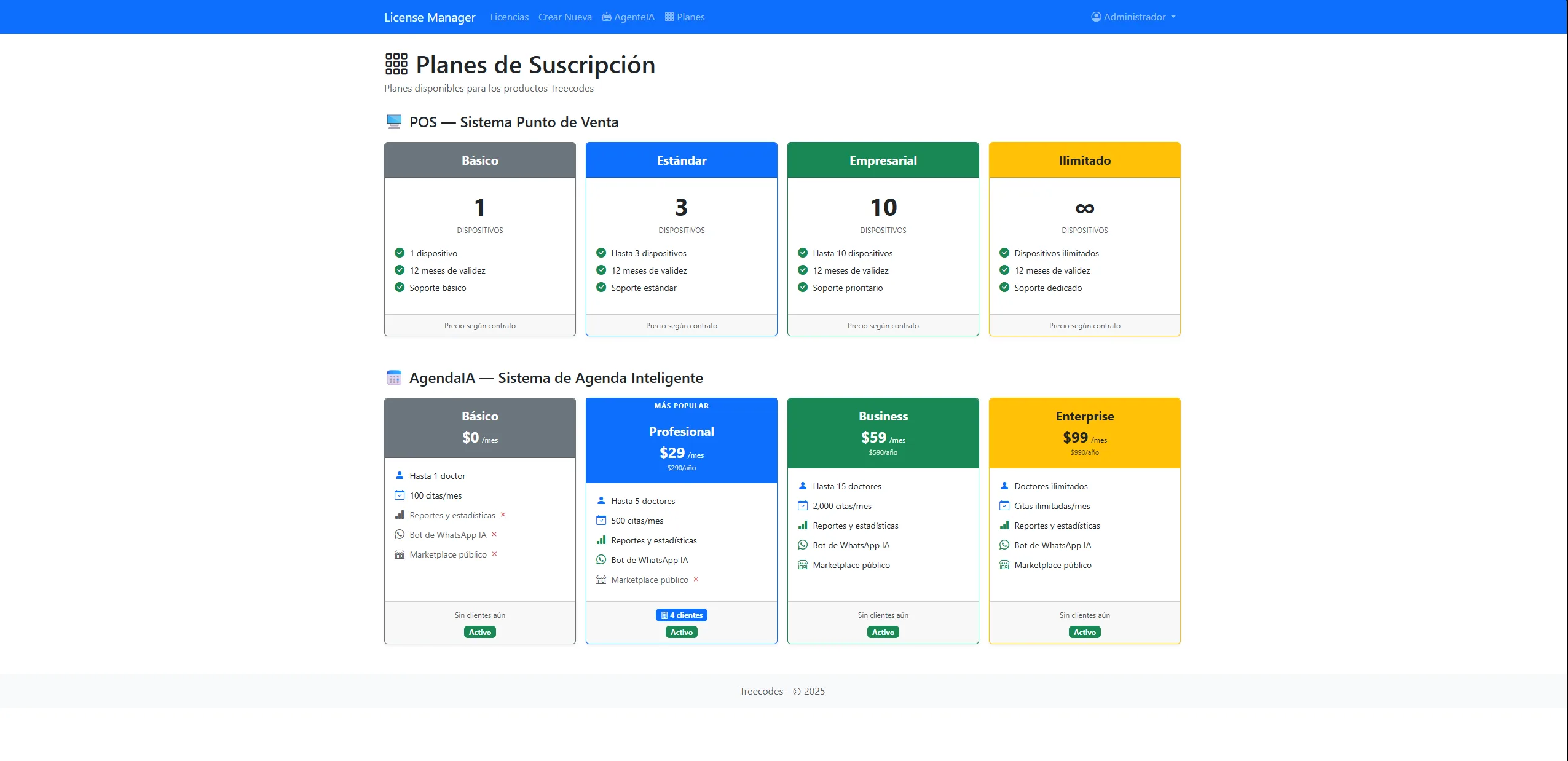
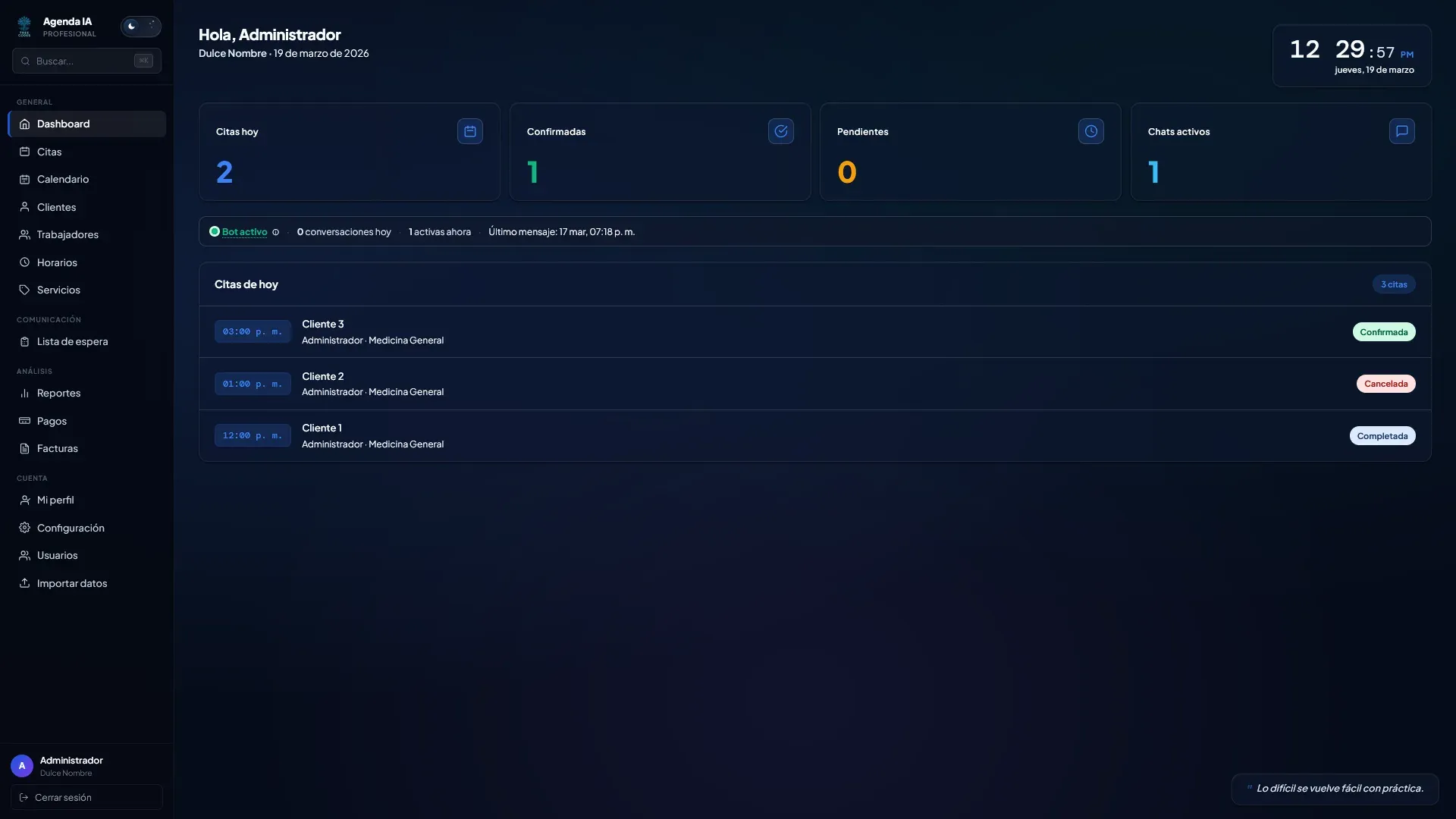
Agenda IA — AgenteIAProvisionService handles the full provisioning cycle: creates the agente_slug_xxxxxxxx database with utf8mb4 charset, imports the complete schema via a custom SQL parser with DELIMITER block support, creates the MySQL user with isolated per-database permissions, seeds the plans tables (basic / professional / business / enterprise) and the trial subscription, registers the admin user with BCrypt, updates the central tenant index in maestra_db for multi-tenant login routing, and generates the WhatsApp webhook URL.
Device authorization — POS terminals (Java desktop applications) send activation requests containing their hardware token. The panel displays pending and authorized devices, and allows the operator to approve, reject, or revoke access in one click. Every action writes an event to IAuditService with the IP address, operator name, and partial token for full audit traceability. A rate limiter blocks IPs after 5–10 failed attempts for 30–60 minutes.
Outcome
License Manager turned client onboarding from a multi-hour manual process — running scripts on the server, importing schemas, setting up users, configuring credentials — into a single form submission that completes in under a minute with automatic rollback if anything fails. One operator now manages the full client base across two SaaS products from a single panel. The layered security model means the control plane is protected even if a single layer is misconfigured, and the audit log gives full traceability of every action taken.